The assessment of pre-season testing
The Barcelona 2 tests ended on Sunday evening, also marking the end of pre-season testing. There will have been three test sessions and with less than two weeks to go before the first Grand Prix of the season in Melbourne, it is an opportunity to assess these Barcelona 2 tests and the pre-season tests more generally.

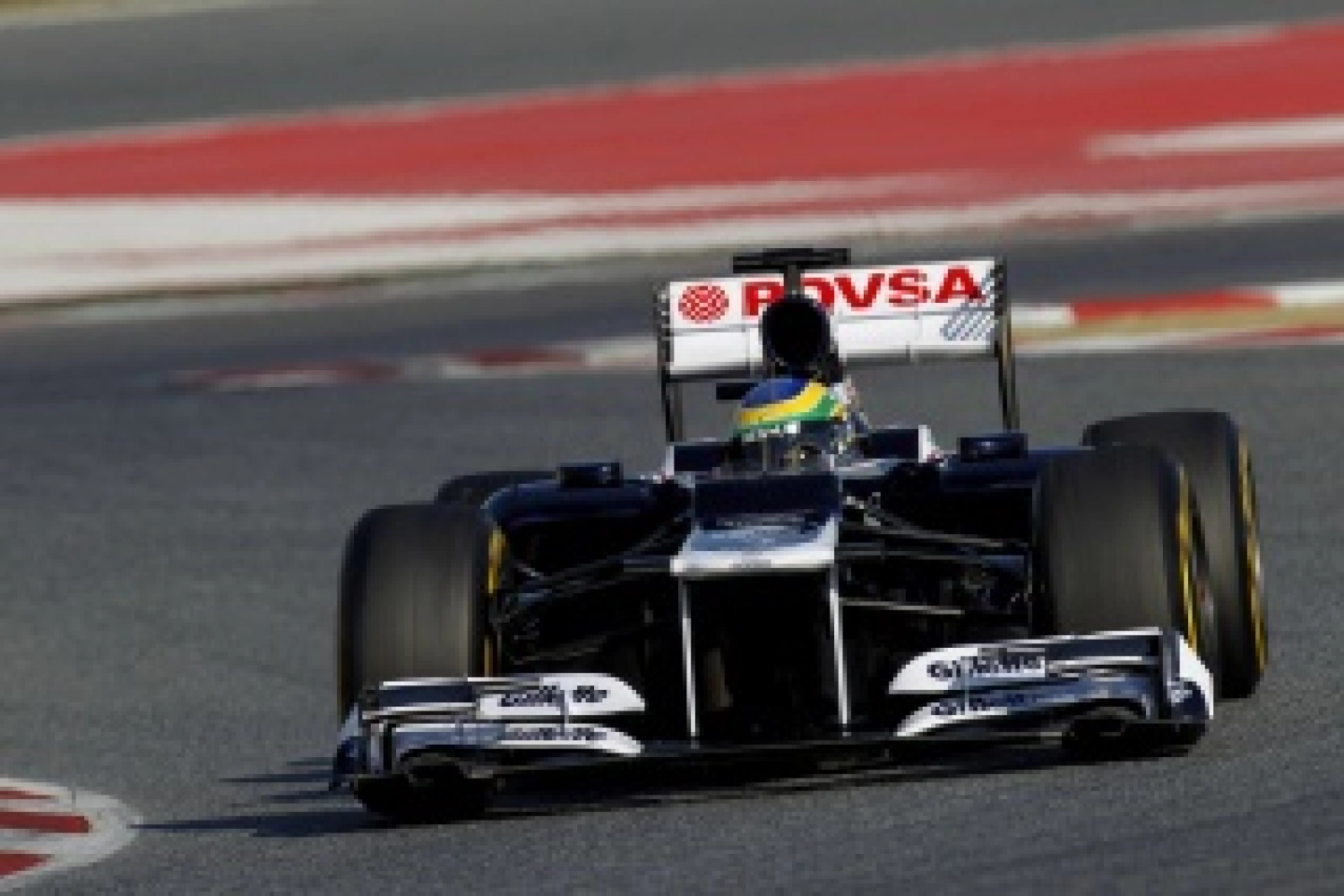
The last four days of pre-season testing concluded on Sunday at the Circuit de Catalunya in Barcelona. It was Kimi Räikkönen driving the Lotus E20 who proved to be the fastest of the day – and also of the eight days spent in Barcelona.
As can be seen from the following table of the best laps on track by driver, there is little difference between the 10 teams present in Barcelona – HRT and Marussia were not in Spain for these tests.
The drivers are generally within 1 second – some times are not fully representative, notably those set on Mediums for Vettel and those set on the second day, where overall, the times were half a second slower than on day 4.
It is, however, premature to say that the hierarchy from these Barcelona tests will be the same as in the first Grand Prix because it would be surprising to see the Mercedes and Red Bulls “badly positioned” and the Sauber, Toro Rosso, Williams, and Force India so well represented in the top 10.
The ranking of the best laps per driver for the Barcelona 2 tests
| N° | Driver | Team | Times | Gap | Pneumatiques | |
|
1
|
Räikkönen | Lotus F1 Team | 1.22.030 | Tendres |
Jour 4 (12h54)
|
|
|
2
|
Perez | Sauber | 1.22.094 | +0.064 | Tendres |
Jour 3 (12h22)
|
|
3
|
Button | McLaren | 1.22.103 | +0.073 | Tendres |
Jour 3 (14h59)
|
|
4
|
Ricciardo | Toro Rosso | 1.22.155 | +0.125 | Super-Tendres |
Jour 3 (12h19)
|
|
5
|
Alonso | Ferrari | 1.22.250 | +0.220 | Tendres |
Jour 4 (10h53)
|
|
6
|
Senna | Williams | 1.22.296 | +0.266 | Tendres |
Jour 4 (11h00)
|
|
7
|
Hülkenberg | Force India | 1.22.312 | +0.282 | Tendres |
Jour 4 (12h26)
|
|
8
|
Kobayashi | Sauber | 1.22.386 | +0.356 | Tendres |
Jour 4 (12h21)
|
|
9
|
Massa | Ferrari | 1.22.413 | +0.383 | Super-Tendres |
Jour 3 (11h00)
|
|
10
|
Hamilton | McLaren | 1.22.430 | +0.400 | Tendres |
Jour 4 (12h01)
|
|
11
|
di Resta | Force India | 1.22.446 | +0.416 | Super-Tendres |
Jour 3 (12h13)
|
|
12
|
Grosjean | Lotus F1 Team | 1.22.614 | +0.584 | Tendres |
Jour 2 (17h27)
|
|
13
|
Kovalainen | Caterham F1 | 1.22.630 | +0.600 | Super-Tendres |
Jour 3 (12h13)
|
|
14
|
Webber | Red Bull | 1.22.662 | +0.632 | Tendres |
Jour 3 (12h47)
|
|
15
|
Petrov | Caterham F1 | 1.22.795 | +0.765 | Super-Tendres |
Jour 4 (12h48)
|
|
16
|
Rosberg | Mercedes AMG | 1.22.932 | +0.902 | Tendres |
Jour 3 (12h44)
|
|
17
|
Schumacher | Mercedes AMG | 1.22.939 | +0.909 | Tendres |
Jour 4 (12h49)
|
|
18
|
Vergne | Toro Rosso | 1.23.126 | +1.096 | Tendres |
Jour 2 (12h31)
|
|
19
|
Maldonado | Williams | 1.23.347 | +1.317 | Super-Tendres |
Jour 4 (15h15)
|
|
20
|
Vettel | Red Bull | 1.23.361 | +1.331 | Mediums |
Jour 2 (15h43)
|
One surprising piece of information on this table is the presence of Mercedes and Red Bull drivers at the bottom of the rankings. The fuel quantities have not been disclosed, but let’s hope for Mercedes AMG that Rosberg and Schumacher had fuel or tires that were not new during their best laps.
For Sebastian Vettel, this last place is explained by the troubles encountered on Sunday – with a front wing problem followed by a gearbox issue. The German driver was only able to do 23 laps and didn’t have time to focus on performance.
Let’s now move on to the ranking of the number of laps completed, and at the top of this ranking, we find Nico Rosberg and his Mercedes AMG F1 W03. The German driver has completed 257 laps in two days – which is slightly more than the number of laps in 4 Spanish Grand Prix.
At the bottom of the standings, we find Sebastian Vettel and Jenson Button who experienced problems on Sunday and Saturday respectively, which prevented them from driving as much as planned. Their teammates were able to drive a bit more, which means their teams are not left without data to analyze.
Ranking of the number of laps completed by each driver during the Barcelona 2 tests
| N° | Driver | Team | Laps couverts |
|
1
|
Rosberg | Mercedes AMG |
257
|
|
2
|
Alonso | Ferrari |
239
|
|
3
|
Perez | Sauber |
232
|
|
4
|
Ricciardo | Toro Rosso |
231
|
|
5
|
Massa | Ferrari |
227
|
|
6
|
Petrov | Caterham F1 |
224
|
|
7
|
Senna | Williams |
212
|
|
8
|
Di Resta | Force India |
206
|
|
9
|
Grosjean | Lotus F1 Team |
196
|
|
10
|
Hamilton | McLaren |
180
|
|
11
|
Schumacher | Mercedes AMG |
179
|
|
12
|
Webber | Red Bull |
172
|
|
13
|
Kovalainen | Caterham F1 |
168
|
|
14
|
Räikkönen | Lotus F1 Team |
164
|
|
15
|
Kobayashi | Sauber |
149
|
|
16
|
Vergne | Toro Rosso |
144
|
|
17
|
Hülkenberg | Force India |
134
|
|
18
|
Maldonado | Williams |
126
|
|
19
|
Vettel | Red Bull |
108
|
|
20
|
Button | McLaren |
108
|
By transposing the previous team ranking, we find Ferrari as the most diligent team during these Barcelona 2 tests. The reds apparently had new parts to test during these sessions, and they therefore needed to accumulate laps to validate these innovations.
Behind the Italian team, we find Mercedes AMG, which had only tested its single-seater during the Barcelona 1 tests, and therefore needed to run to gather data, set up its car, and verify the proper functioning of all systems.
A small surprise regarding the third place with the presence of Caterham F1. The team led by Tony Fernandes was the first to unveil its car at the end of January. And in Barcelona, it covered nearly 400 laps, which seems to bode well for the 2012 season. The team, which started in F1 in 2010, could fight more regularly in the midfield this season.
Laps covered by team during Barcelona test 2
| N° | Team | Laps couverts |
|
1
|
Ferrari |
466
|
|
2
|
Mercedes AMG |
436
|
|
3
|
Caterham |
392
|
|
4
|
Sauber F1 |
381
|
|
5
|
Toro Rosso |
375
|
|
6
|
Lotus F1 Team |
360
|
|
7
|
Force India |
340
|
|
8
|
Williams |
338
|
|
9
|
McLaren |
288
|
|
10
|
Red Bull |
280
|
At the bottom of the standings, we find McLaren and Red Bull, which makes sense because both teams encountered issues on one day each and did very little running. But even with “so few” laps completed, these two teams should be ready to compete for the top positions in Melbourne.
Last chart to analyze each team’s preparation before the first race of the season, the number of laps completed with their 2012 car. Leading the pack is Williams, with the FW34 being the 2012 car that ran the most during pre-season testing.
The Grove team is ahead of Scuderia Ferrari and the Sauber team. Red Bull, the current double world champion, is only 8th, just ahead of Mercedes AMG and Lotus F1.
At the bottom of the standings, we find HRT and Marussia, which only unveiled their 2012 cars yesterday and did not run during the three scheduled pre-season testing sessions. Next, we have the teams that encountered issues with their cars – Lotus F1 and Red Bull – and the one that launched its car later than the others, Mercedes AMG.
Laps completed by team with 2012 single-seaters since the start of private testing
| N° | Team | Laps couverts |
|
1
|
Williams |
1164
|
|
2
|
Ferrari |
1085
|
|
3
|
Sauber |
1074
|
|
4
|
McLaren |
1067
|
|
5
|
Force India |
1041
|
|
6
|
Caterham F1 |
990
|
|
7
|
Toro Rosso |
987
|
|
8
|
Red Bull |
941
|
|
9
|
Mercedes AMG |
835
|
|
10
|
Lotus F1 Team |
769
|
|
11
|
HRT |
0
|
|
12
|
Marussia |
0
|
One might think that the more a team runs, the better prepared it is, which is partly true, but not entirely. Indeed, a team that has designed a single-seater as an evolution of last year’s model won’t necessarily need to run as much as a team starting from scratch with their car, because the parts have already proven themselves.
Williams and Ferrari decided to change their approach for 2012, and this is evident in the number of laps completed; it seems these two teams needed to do a lot of running to test settings or new parts.
Overall, all the teams – except HRT and Marussia – took advantage of these tests to try out the different 2012 Pirelli compounds and prepare for typical situations – qualifying and race. It is difficult to have a precise idea of the current hierarchy because in a little less than two weeks, the teams will have time to find solutions to their potential problems and thus resolve them in Melbourne.
So, meet in Melbourne, Saturday March 17 after the qualifying session to get a clearer idea of the hierarchy at the start of this 2012 season.